Eye Candy
OVERVIEW
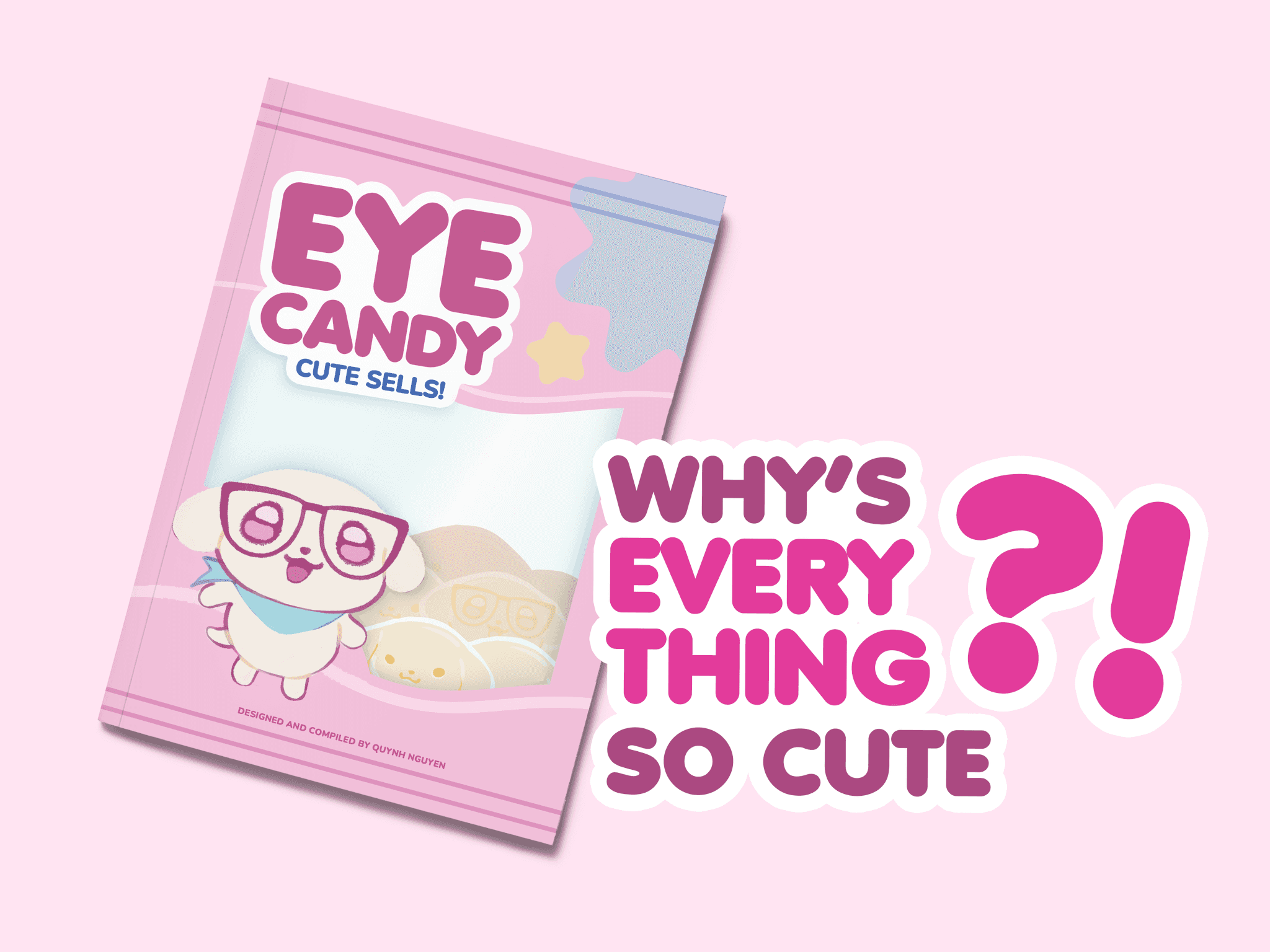
Eye Candy is a book that explores the reasons for why cuteness is so successful at getting customers to spend their money, presented using the very same characteristics that are so emotionally effective!
Eye Candy is a book that explores the reasons for why cuteness is so successful at getting customers to spend their money, presented using the very same characteristics that are so emotionally effective!
Eye Candy is a book that explores the reasons for why cuteness is so successful at getting customers to spend their money, presented using the very same characteristics that are so emotionally effective!
PROCESS WORK

PROCESS WORK
PROCESS WORK
PROCESS WORK
PROCESS WORK
PROCESS WORK
PROCESS WORK
PROCESS WORK
PROCESS WORK
PROCESS WORK
PROCESS WORK
PROCESS WORK
PROCESS WORK
PROCESS WORK
PROCESS WORK
PROCESS WORK
PROCESS WORK
PROCESS WORK
INITIAL CONCEPT
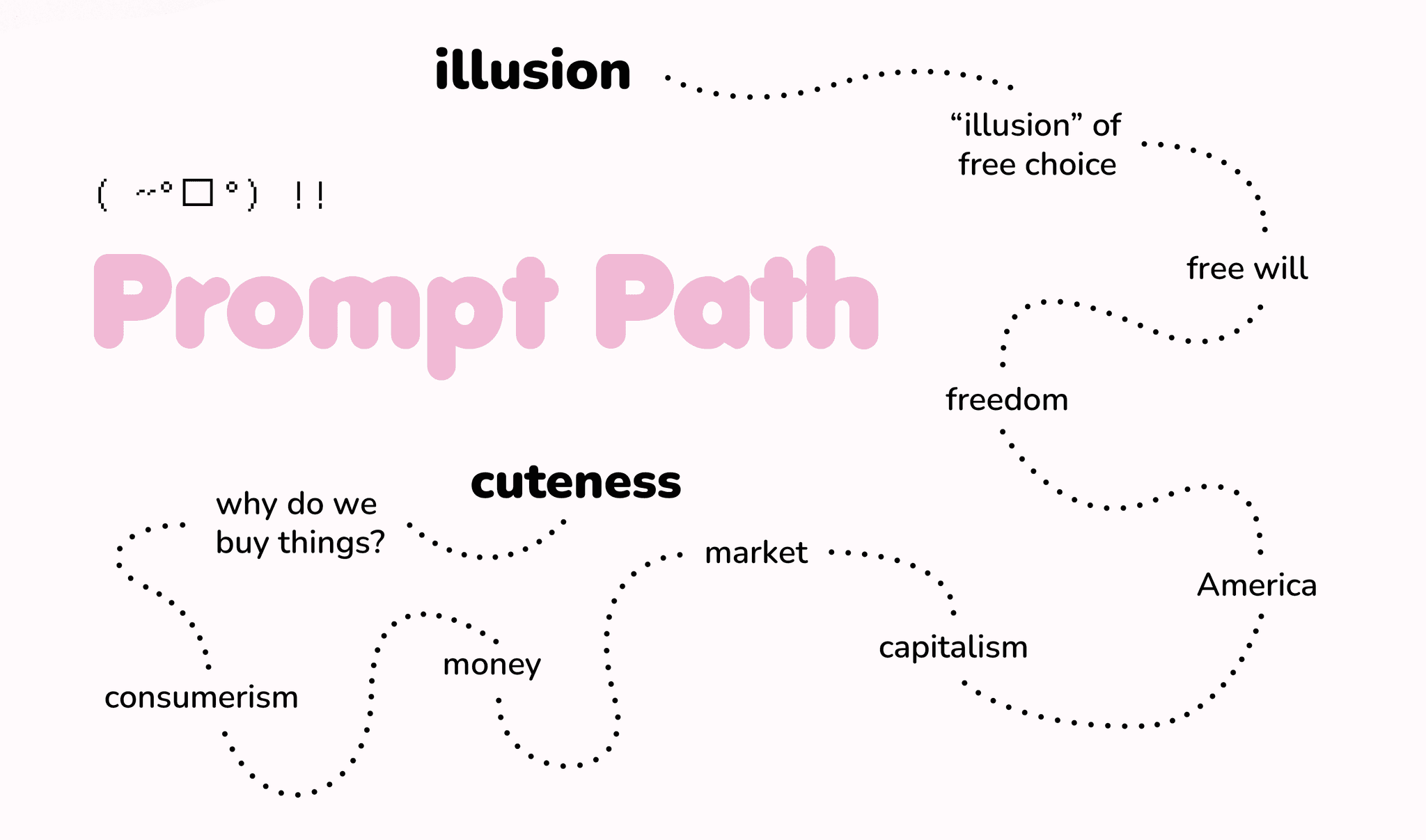
Tasked with finding a topic for a book beginning with the word illusion, I came up with the prompt path below. I eventually landed on marketing cuteness. The initial concept of the book was that packaging is, in a sense, an "illusion" to get customers to spend their money. As the project progressed, it eventually embraced the topic's fun and cutesy nature, aiming to indulge readers in cuteness, while also informing them on the psychology of cuteness!
Tasked with finding a topic for a book beginning with the word illusion, I came up with the prompt path below. I eventually landed on marketing cuteness. The initial concept of the book was that packaging is, in a sense, an "illusion" to get customers to spend their money. As the project progressed, it eventually embraced the topic's fun and cutesy nature, aiming to indulge readers in cuteness, while also informing them on the psychology of cuteness!
Tasked with finding a topic for a book beginning with the word illusion, I came up with the prompt path below. I eventually landed on marketing cuteness. The initial concept of the book was that packaging is, in a sense, an "illusion" to get customers to spend their money. As the project progressed, it eventually embraced the topic's fun and cutesy nature, aiming to indulge readers in cuteness, while also informing them on the psychology of cuteness!
THE MASCOT
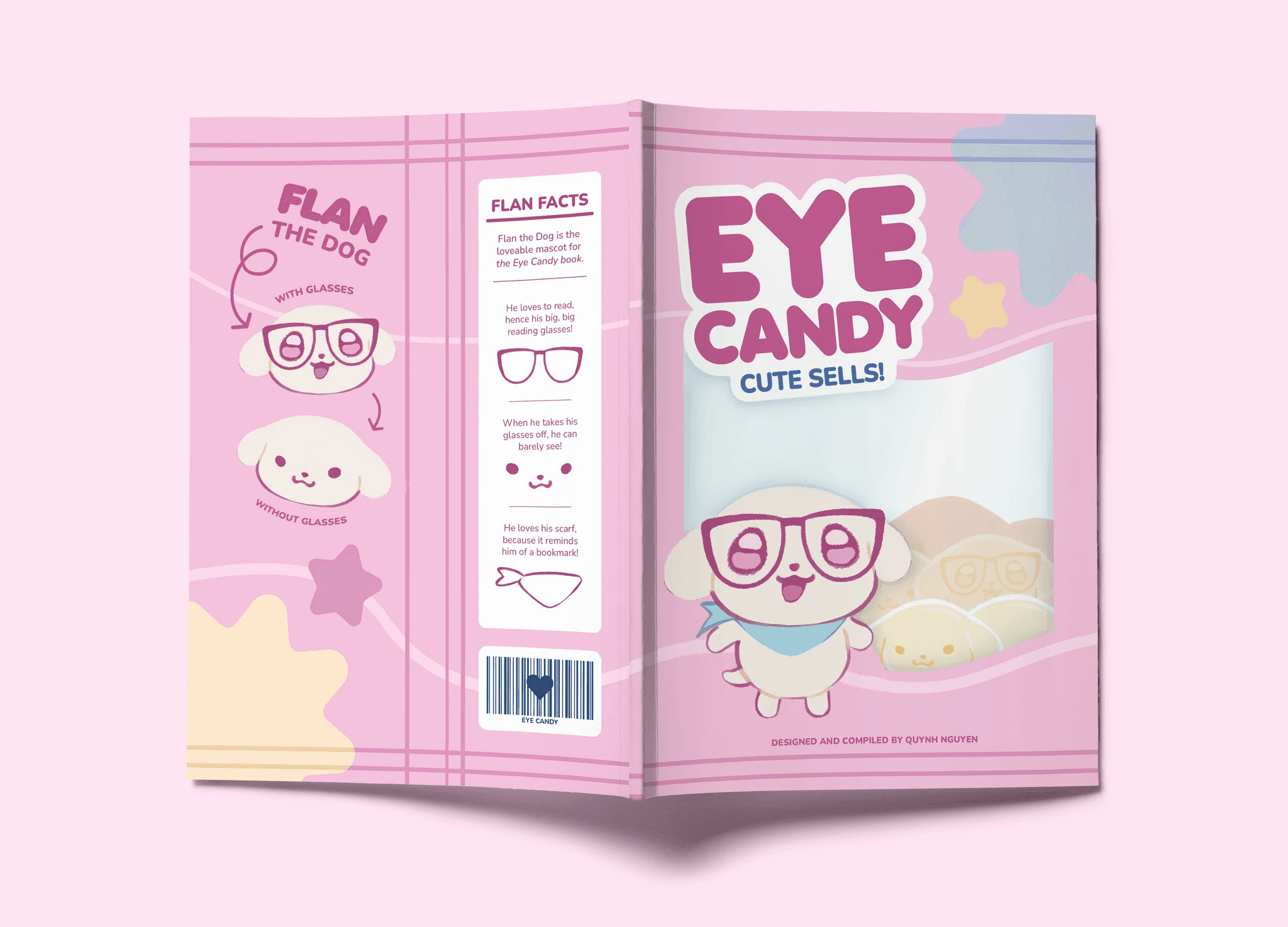
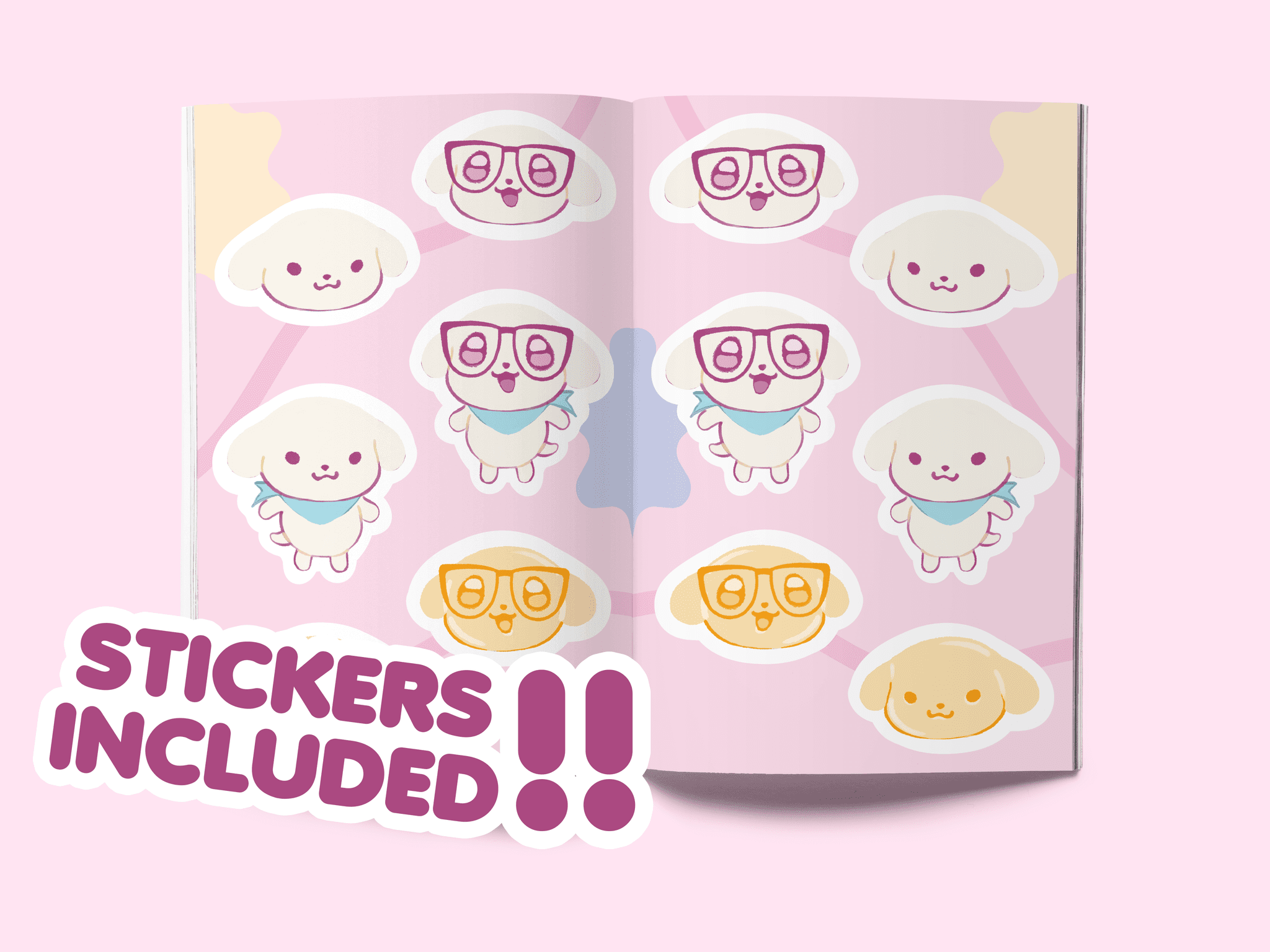
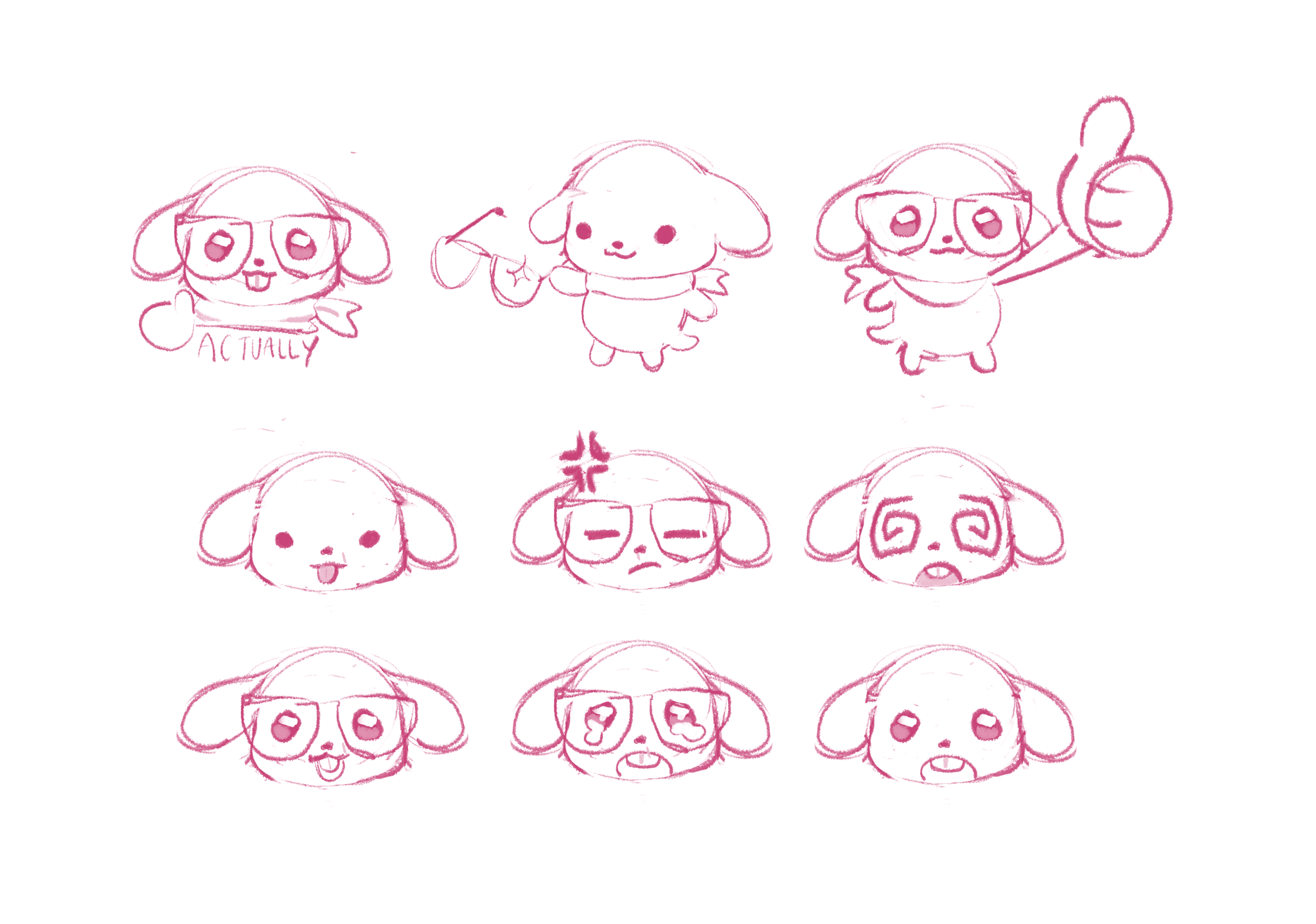
Every lovable brand has a lovable mascot! That was the motivation for creating Flan the Dog. Conceptually, he is the selling point and mascot of the Eye Candy book. Many Japanese mascots are designed with charm points that are appealing to consumers in order to be sellable. I designed Flan to have a few notable charm points, such as having big reading glasses to help with his blurry vision. Without them, his eyes shrink! Isn't he adorable?
Every lovable brand has a lovable mascot! That was the motivation for creating Flan the Dog. Conceptually, he is the selling point and mascot of the Eye Candy book. Many Japanese mascots are designed with charm points that are appealing to consumers in order to be sellable. I designed Flan to have a few notable charm points, such as having big reading glasses to help with his blurry vision. Without them, his eyes shrink! Isn't he adorable?
Every lovable brand has a lovable mascot! That was the motivation for creating Flan the Dog. Conceptually, he is the selling point and mascot of the Eye Candy book. Many Japanese mascots are designed with charm points that are appealing to consumers in order to be sellable. I designed Flan to have a few notable charm points, such as having big reading glasses to help with his blurry vision. Without them, his eyes shrink! Isn't he adorable?
✦ ROUGH SKETCHES OF FLAN
✦ ROUGH SKETCHES OF FLAN
VISUAL DIRECTION
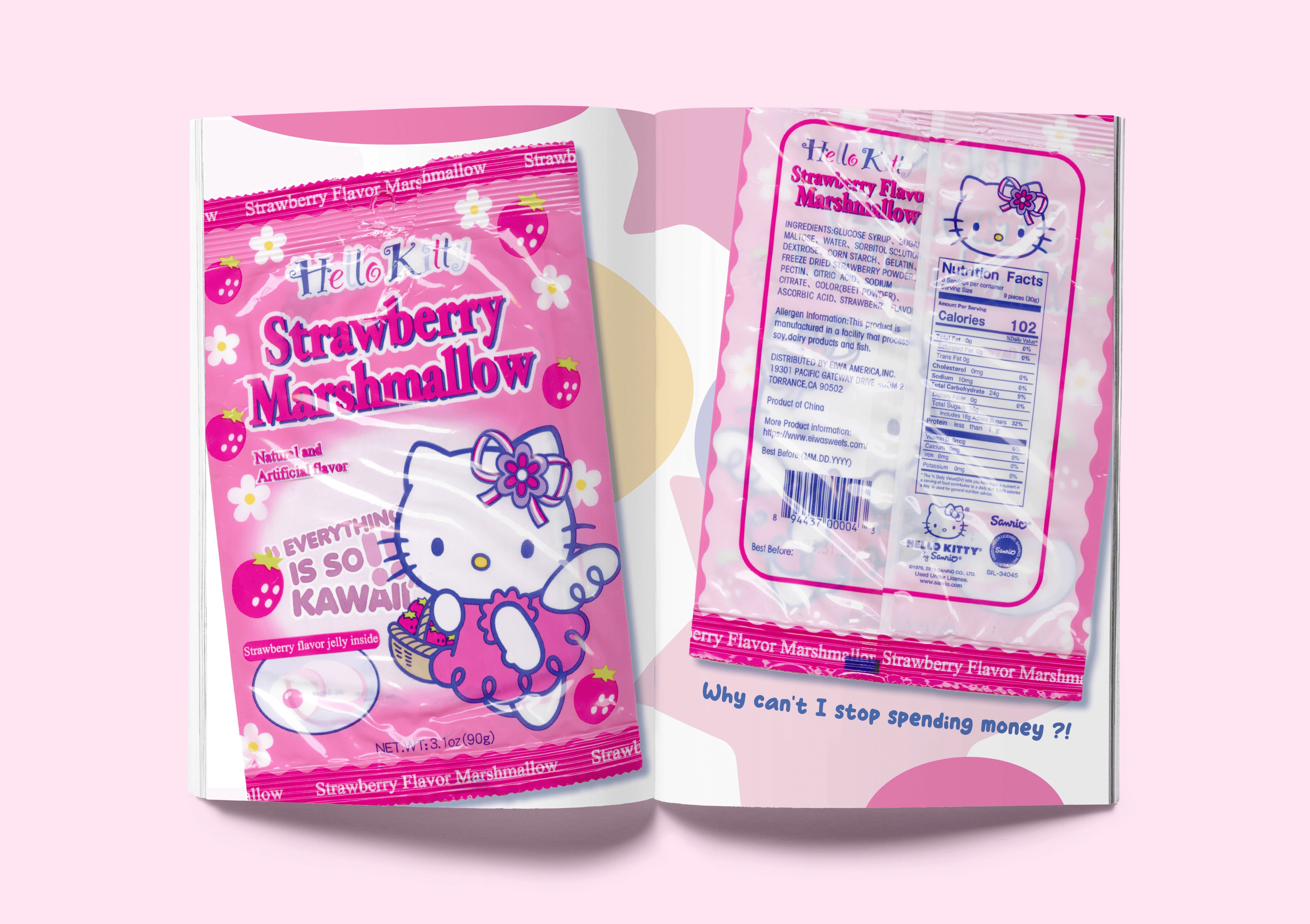
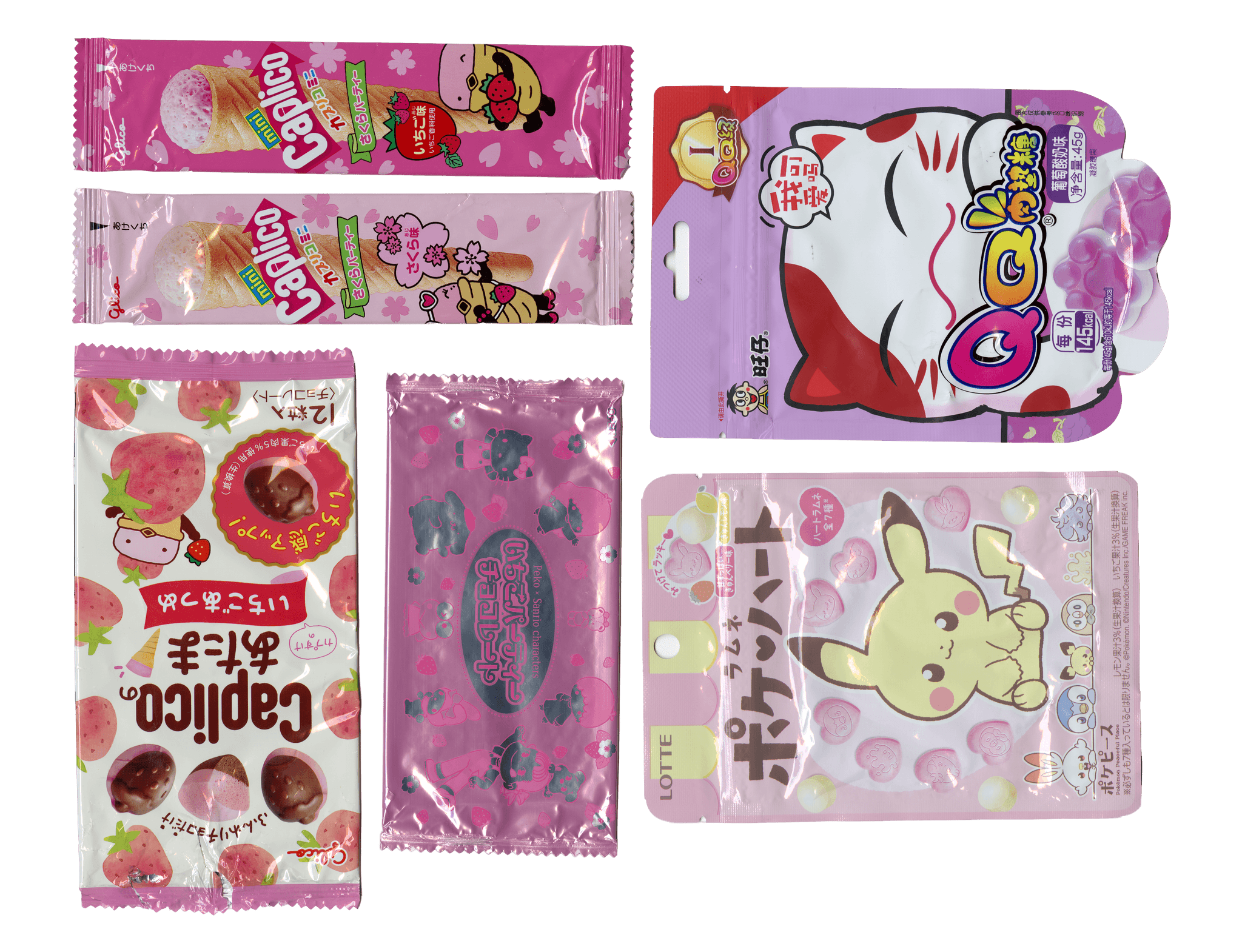
I drew inspiration from cute packaging of Japanese snacks and goods that I collected as part of the assignment to use found materials, especially the ones that use mascots. Through collecting a variety of cute packaging, I noticed many of them used fun shapes and cute colors such as pinks and yellows. Many also utilized bold and bubbly typefaces. I combined these visual elements when putting together the visual language for the book.
I drew inspiration from cute packaging of Japanese snacks and goods that I collected as part of the assignment to use found materials, especially the ones that use mascots. Through collecting a variety of cute packaging, I noticed many of them used fun shapes and cute colors such as pinks and yellows. Many also utilized bold and bubbly typefaces. I combined these visual elements when putting together the visual language for the book.
I drew inspiration from cute packaging of Japanese snacks and goods that I collected as part of the assignment to use found materials, especially the ones that use mascots. Through collecting a variety of cute packaging, I noticed many of them used fun shapes and cute colors such as pinks and yellows. Many also utilized bold and bubbly typefaces. I combined these visual elements when putting together the visual language for the book.
TYPE SYSTEM
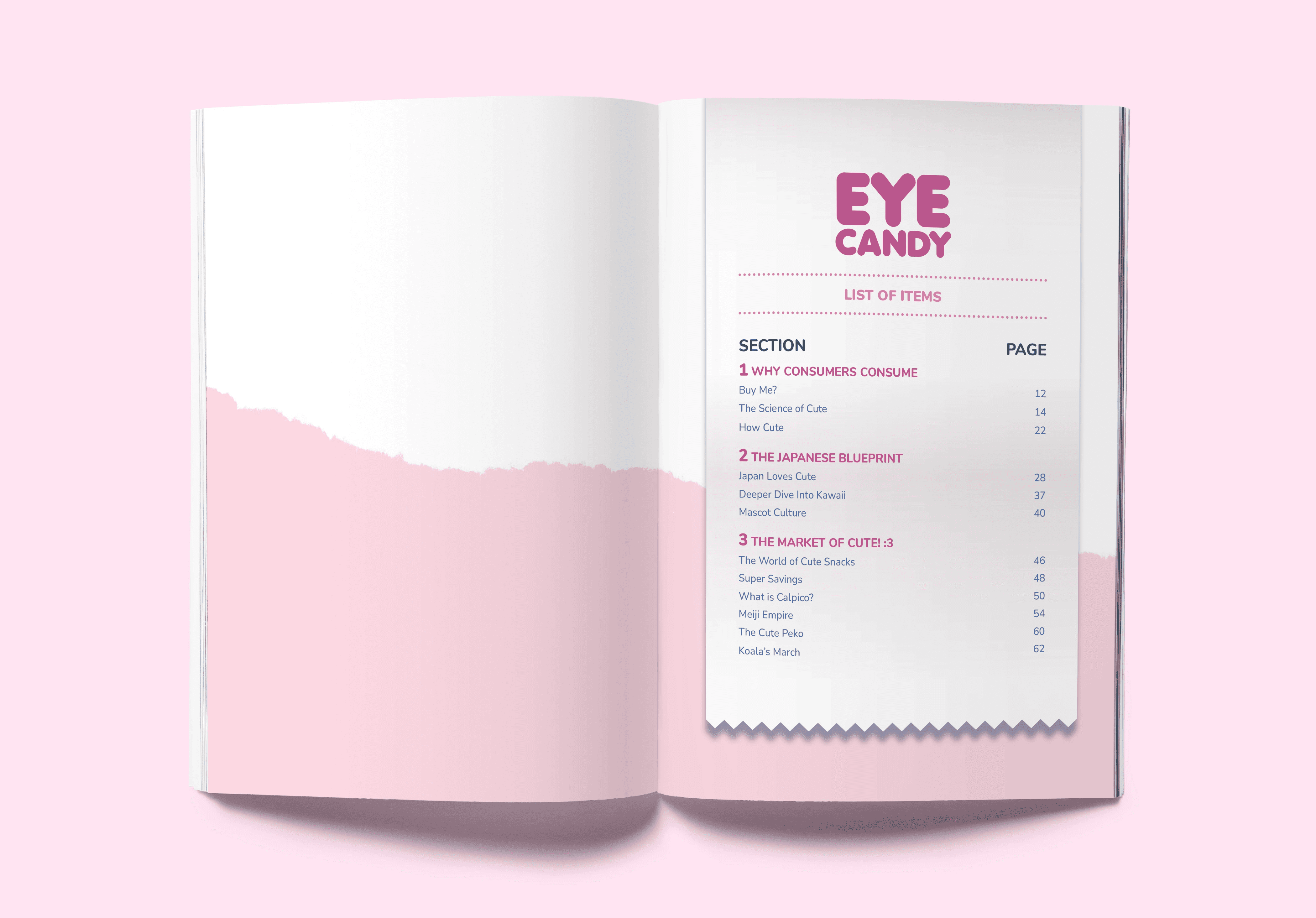
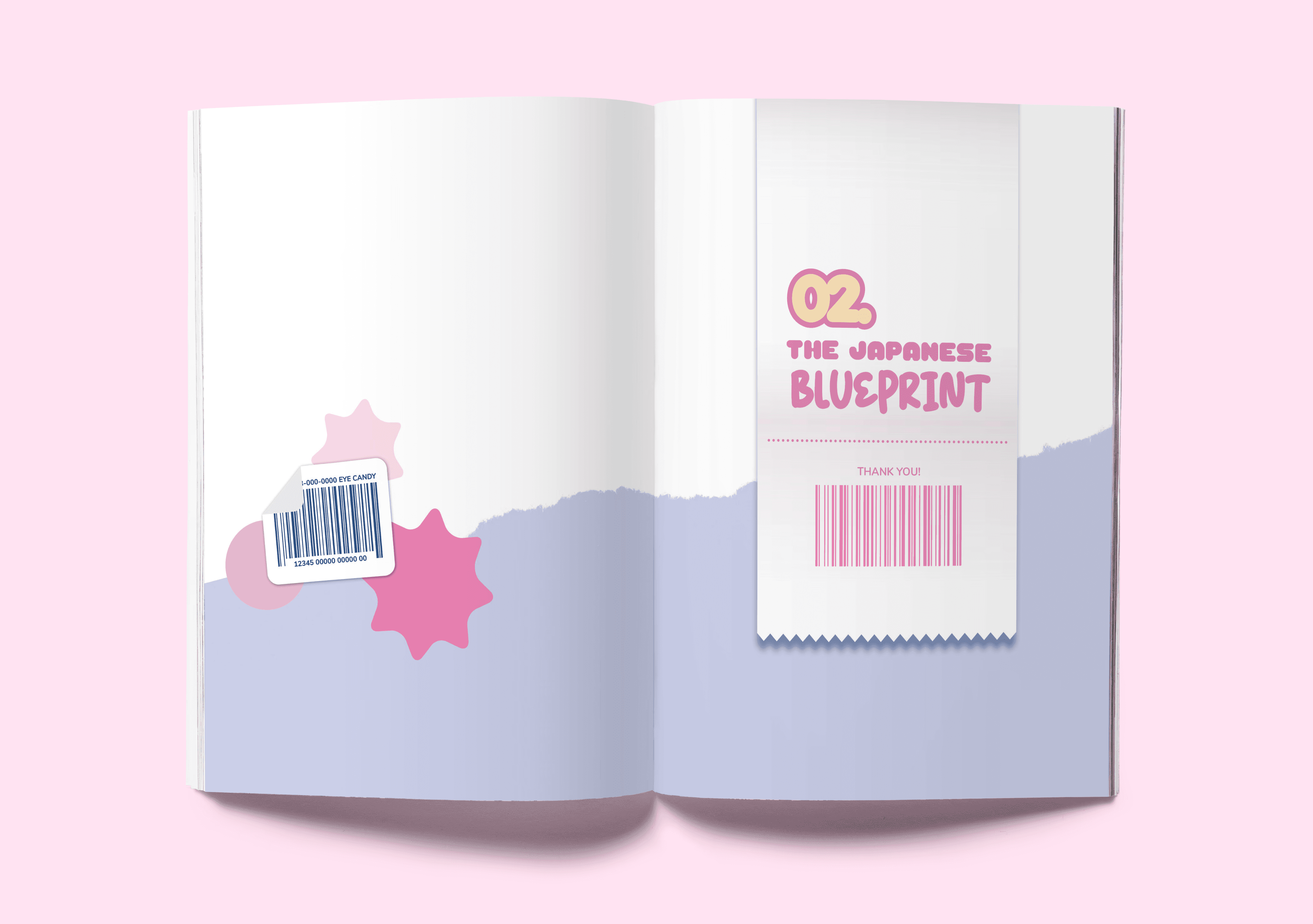
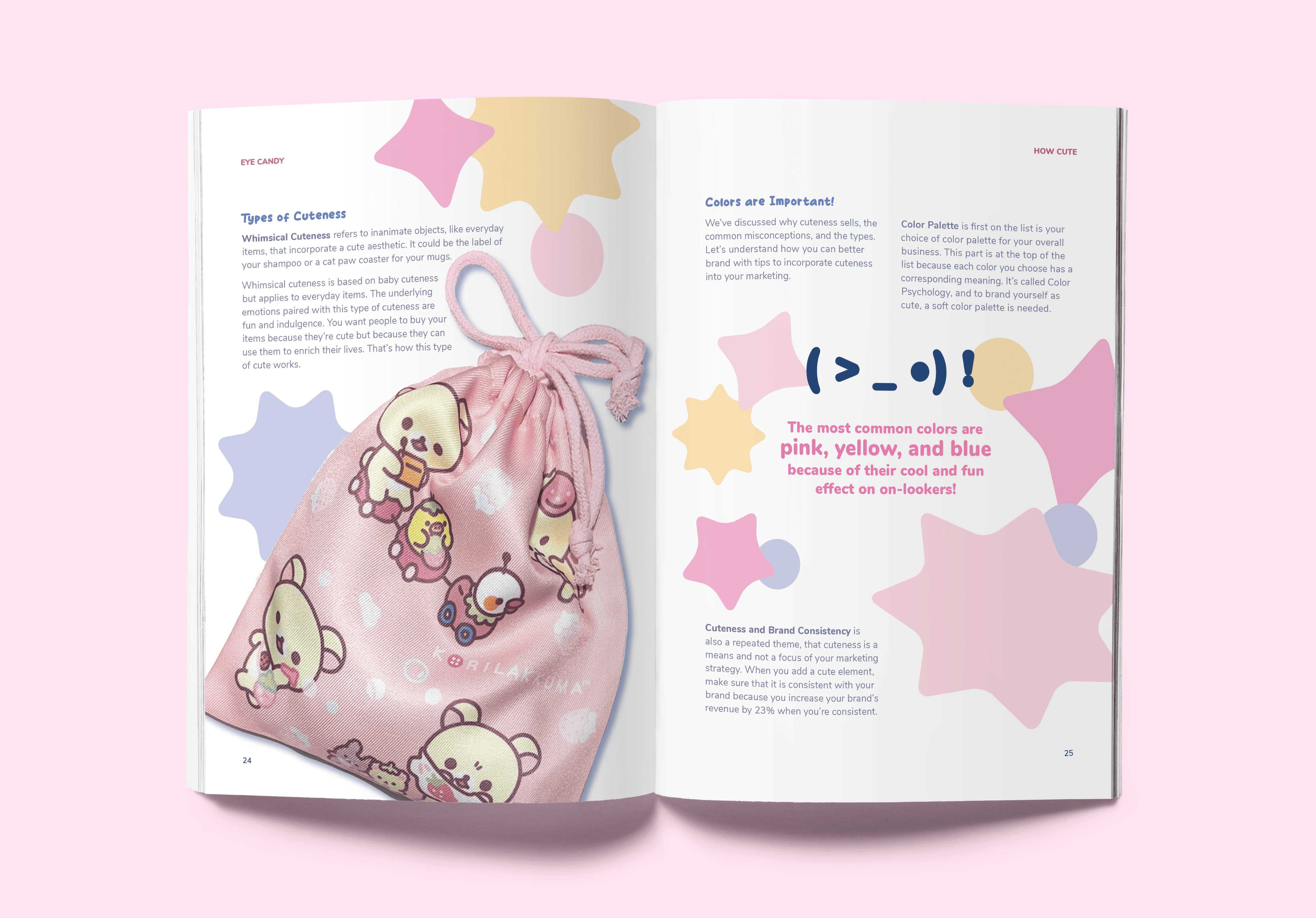
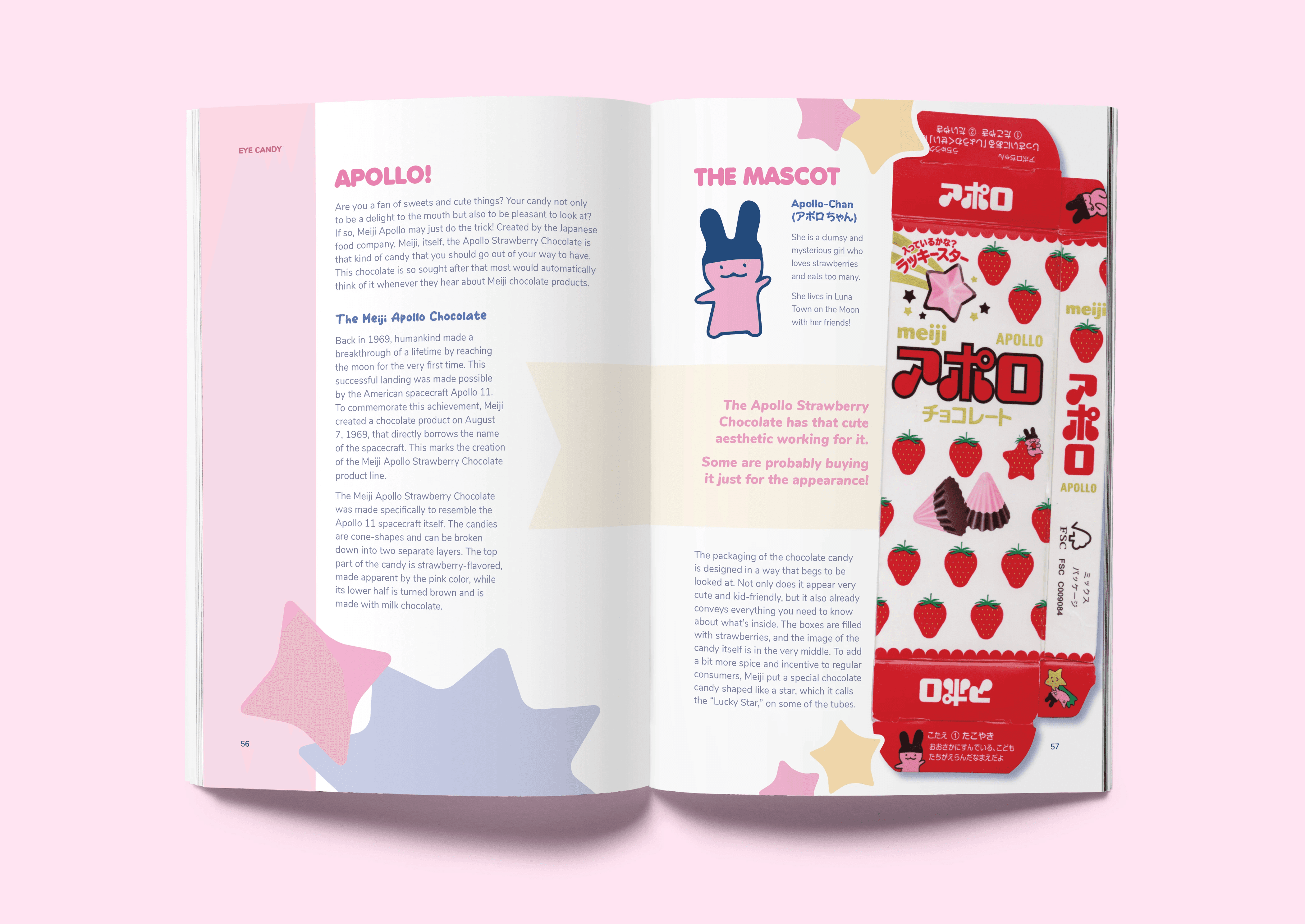
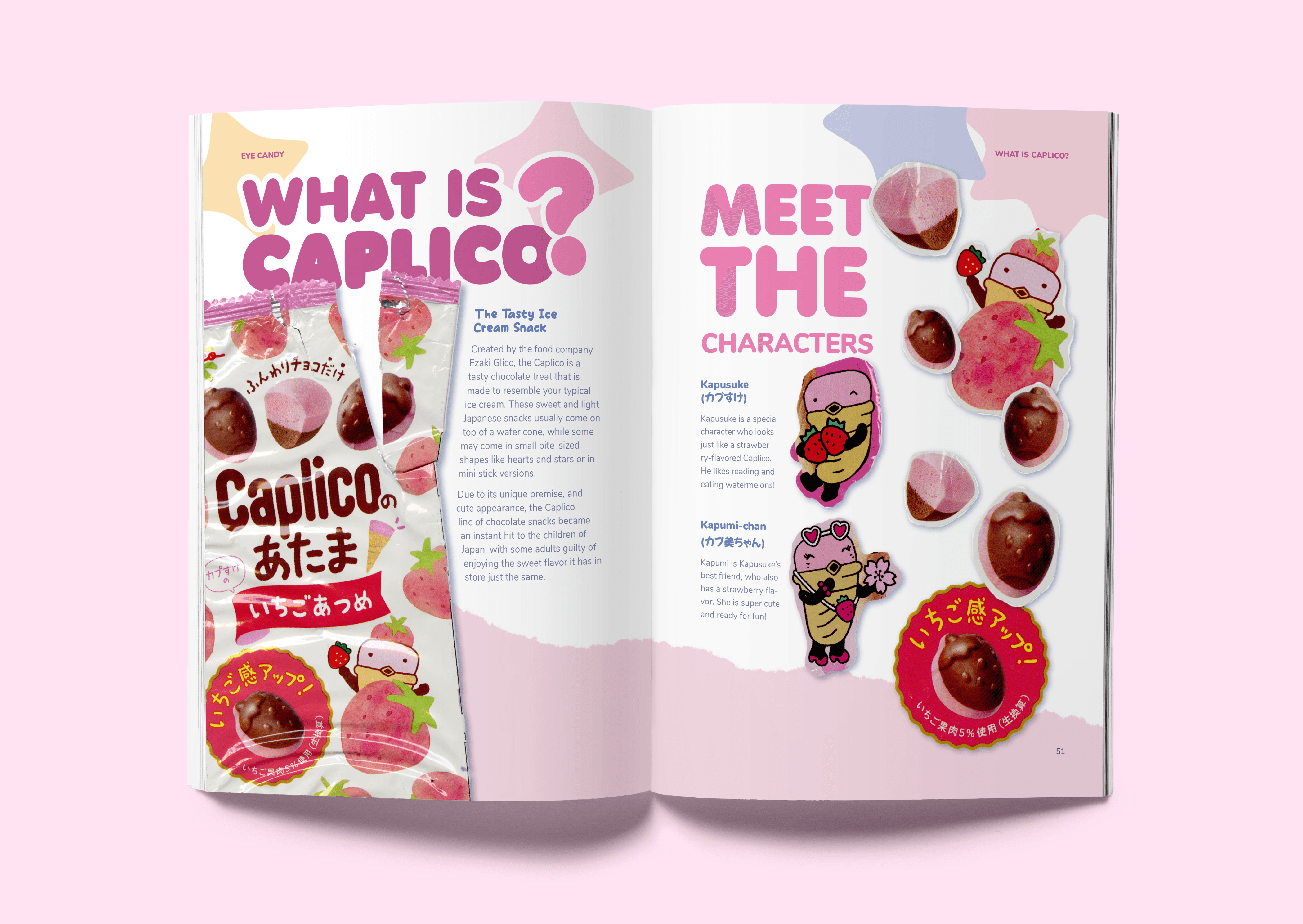
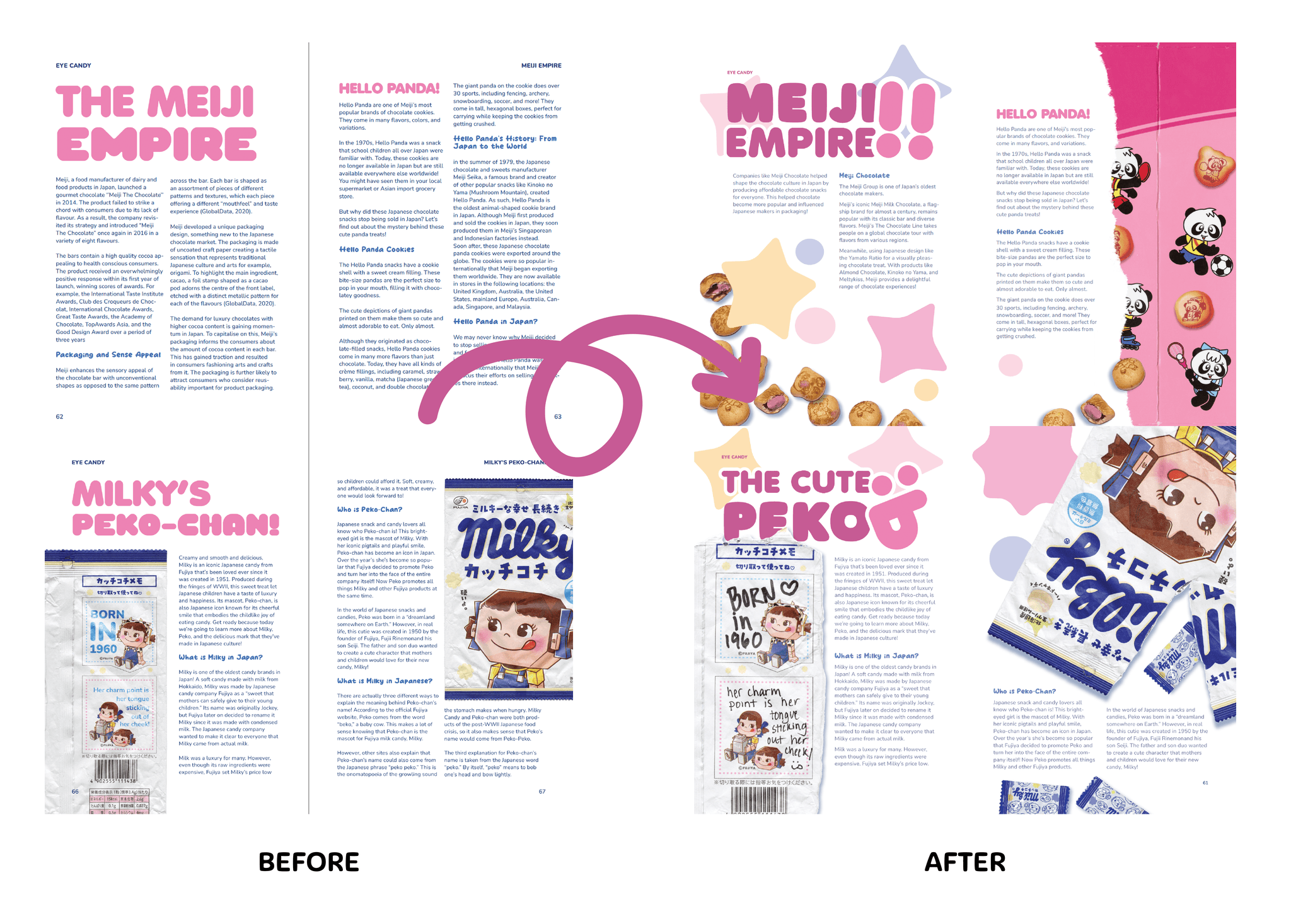
The biggest challenge I faced was creating a type system that was structural enough for a book, while also being fun. When designing the titles for each chapter, I wanted to find a way for all the elements to interact with each other; type, shapes, and imagery. The first spreads I designed were too constricted to the grid. Through experimentation, I found ways to be playful with the paragraph layout.
The biggest challenge I faced was creating a type system that was structural enough for a book, while also being fun. When designing the titles for each chapter, I wanted to find a way for all the elements to interact with each other; type, shapes, and imagery. The first spreads I designed were too constricted to the grid. Through experimentation, I found ways to be playful with the paragraph layout.
The biggest challenge I faced was creating a type system that was structural enough for a book, while also being fun. When designing the titles for each chapter, I wanted to find a way for all the elements to interact with each other; type, shapes, and imagery. The first spreads I designed were too constricted to the grid. Through experimentation, I found ways to be playful with the paragraph layout.
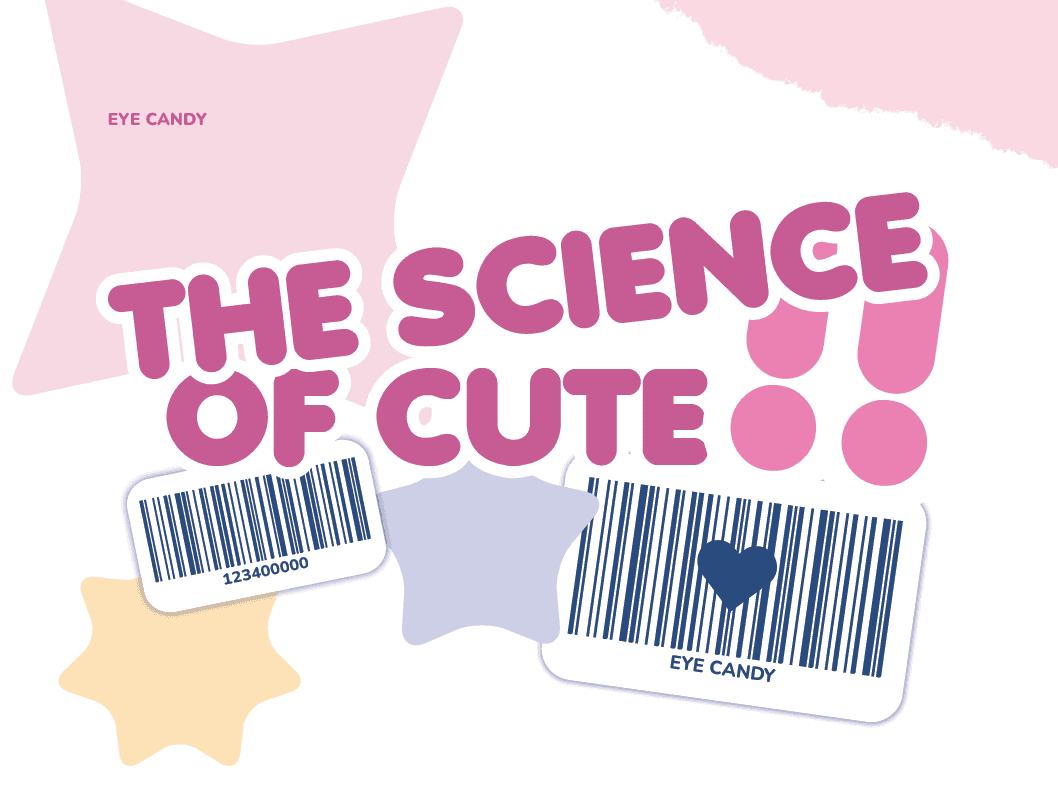
✦ TITLE TREATMENT SAMPLES
✦ TITLE TREATMENT SAMPLES
COVER DESIGN
According to the definition from Oxford Languages, eye candy are "visual images that are superficially attractive and entertaining but intellectually undemanding." Though not literal candy, the term was the inspiration behind making the book cover resemble a candy pack! On top of that, the book goes over a few popular Asian snacks, all of which utilize the same cuteness marketing tactics.
According to the definition from Oxford Languages, eye candy are "visual images that are superficially attractive and entertaining but intellectually undemanding." Though not literal candy, the term was the inspiration behind making the book cover resemble a candy pack! On top of that, the book goes over a few popular Asian snacks, all of which utilize the same cuteness marketing tactics.
According to the definition from Oxford Languages, eye candy are "visual images that are superficially attractive and entertaining but intellectually undemanding." Though not literal candy, the term was the inspiration behind making the book cover resemble a candy pack! On top of that, the book goes over a few popular Asian snacks, all of which utilize the same cuteness marketing tactics.
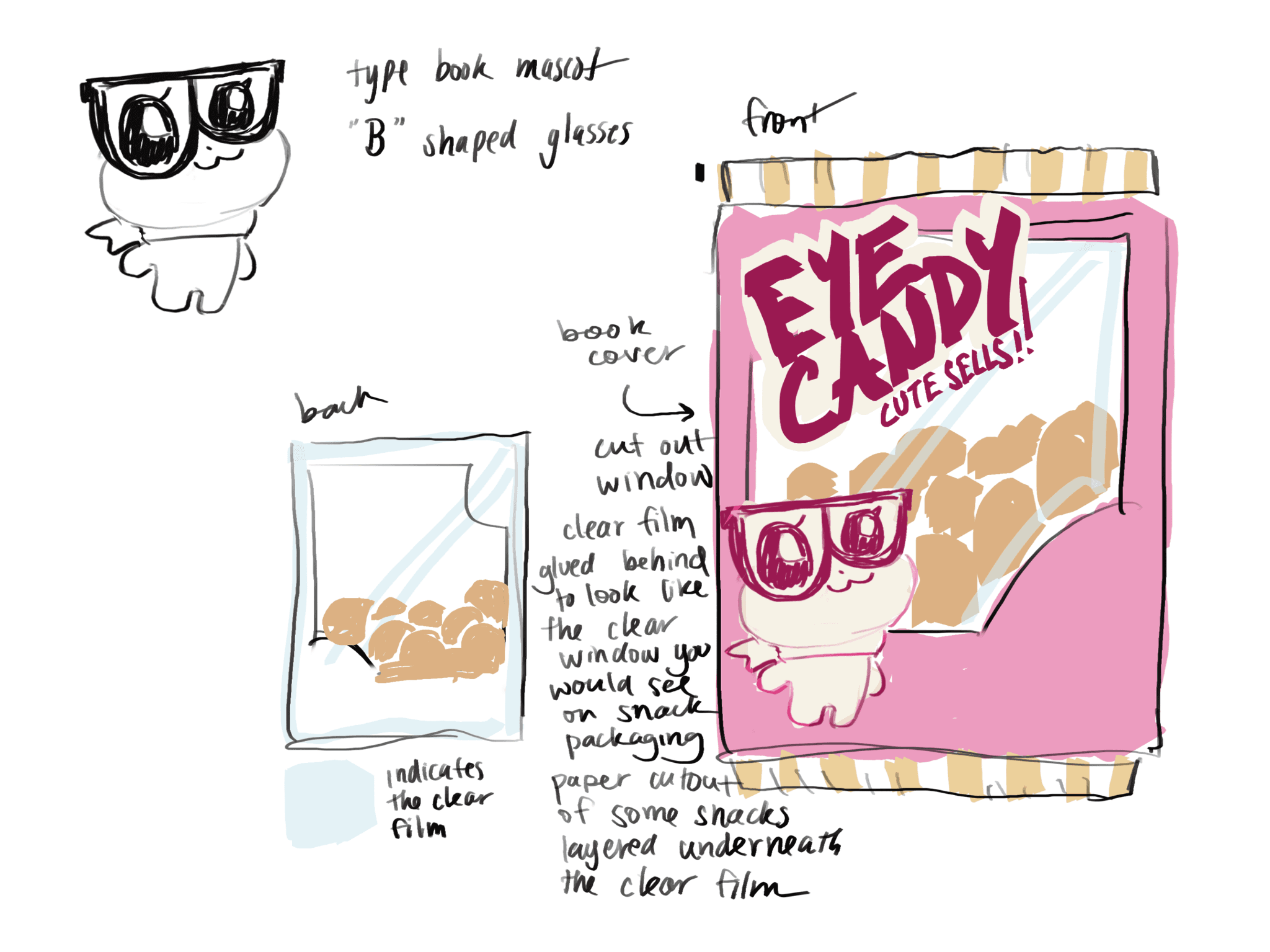
✦ FIRST DRAFT OF THE COVER CONCEPT
✦ FIRST DRAFT OF THE COVER CONCEPT